Free tool


Scaffold handover
certificate generator
Fill it in on your phone, tablet or laptop, sign it with your finger, and download a completed handover certificate as a PDF. Built for UK sites. Free, no account, and nothing you type is sent to us.
Built in your browser
The certificate never leaves your device unless you choose to email it. We hold no copy.
UK load classes
BS EN 12811-1 load classes 1 to 6 in kN/m², not the per-bay kilogram ratings used in Australia.
Your logo, signed on site
Add your company logo, then sign with a finger or stylus. Space for the client to sign their acceptance.
- 1Client & site
- 2Scaffold company
- 3Scaffold details
- 4Certification
Your certificate is built in your browser. Nothing you type here is sent to us, and we keep no copy of it.
Handover on a UK site
A handover certificate records the moment a scaffold passes from the crew who built it to the people who will work on it — who erected it, what it was designed to carry, what it may be used for, and who is vouching for it.
In the UK it is good practice rather than law. NASC guidance states there is no statutory requirement for a scaffold contractor to issue a handover certificate, though clients commonly require one in their own interest. That is a real difference from Australia, where WHS Regulation 225 requires written confirmation from a competent person before a scaffold is used. Britain has no equivalent duty, and any page telling you otherwise is wrong.
What the law does compel is inspection. Regulation 12 of the Work at Height Regulations 2005 says a working platform used for construction work, from which a person could fall 2 metres or more, must not be used in any position unless it has been inspected in that position within the previous 7 days. The inspector must produce a report containing the particulars in Schedule 7 before the end of that working period, and get it to the person who commissioned the inspection within 24 hours.
What the law requires after handover
Inspect every 7 days
A working platform with a 2-metre fall must be inspected in position within the previous 7 days. HSE adds the other triggers: before first use, and following any circumstances liable to jeopardise safety — high winds, for instance, or substantial alteration.
Eight particulars, every time
Schedule 7 sets out exactly what the report must contain: who the inspection was for, the location, a description of the equipment, the date and time, anything identified that could give rise to risk, action taken, further action considered necessary, and the name and position of the person reporting.
The report within 24 hours
Regulation 12(7) gives you until the end of the working period to prepare it, and 24 hours to provide it to the person on whose behalf the inspection was carried out. That deadline is frequently missed and rarely mentioned.
Keep it on site, then for 3 months
Regulation 12(8) is a two-stage rule: keep the report at the site until the construction work is completed, and thereafter at an office for 3 months. Ireland is different again — the equivalent report there is form GA3 under a Code of Practice with its own retention rules.
FAQs
Frequently Asked Questions
Handover certificates, scaffold tags and what the rules in the United Kingdom actually ask for.
No. NASC guidance states there is no statutory requirement for a scaffold contractor to issue one, and HSE’s scaffolding guidance does not mention handover at all. Clients routinely require one by contract, and it is the clearest evidence you have that the scaffold was complete and fit for use when you left it — but it is not something the Work at Height Regulations demand. What they demand is inspection and a Schedule 7 report.
Sources
- Work at Height Regulations 2005, regulation 12
- Work at Height Regulations 2005, Schedule 7 — particulars of a report of inspection
- HSE — Scaffolding
- HSE — Construction FAQ: scaffolding
- NASC SG35:21 — Handover of Scaffold Structures and First Scaffold Inspection
- NASC — Competence required to produce TG20:21 compliance sheets
- CITB — CISRS Scaffolding Inspection Training Scheme (SITS)
This page summarises published regulator guidance and is not legal advice. Requirements differ by jurisdiction and change over time.

Stop typing the same scaffold twice
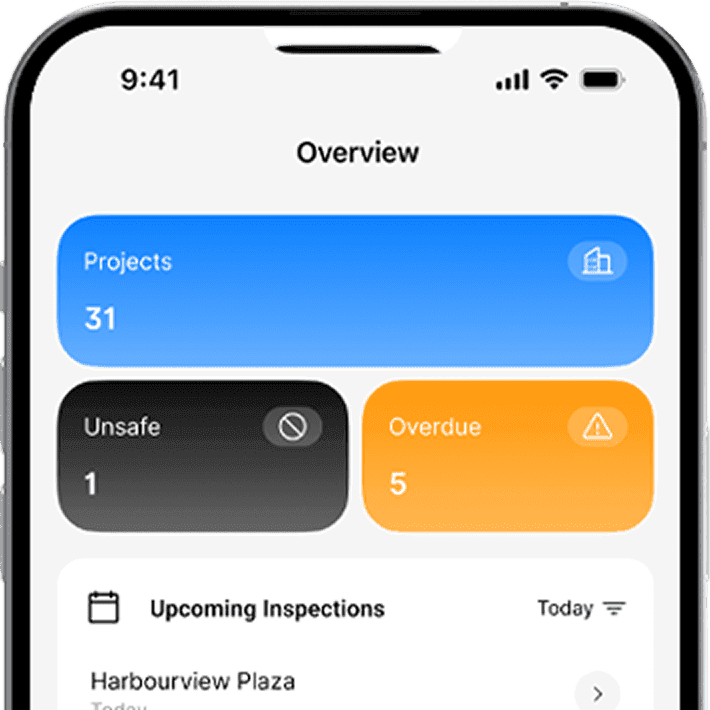
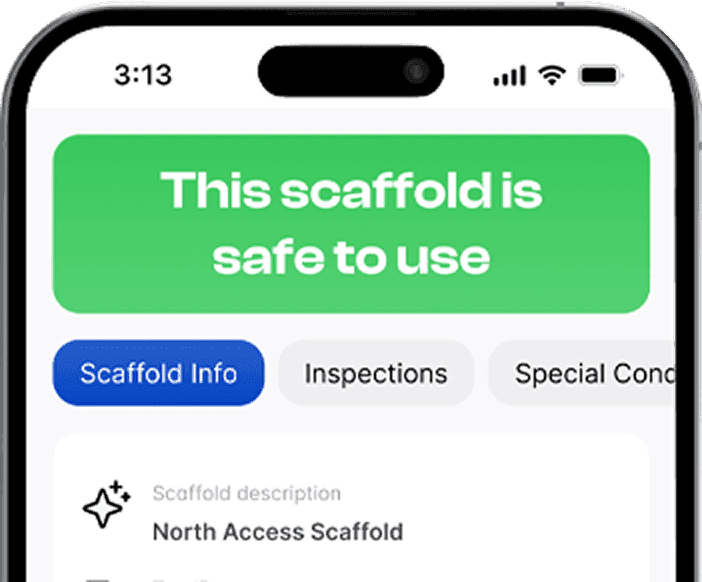
Scafflinq keeps the scaffold, its handover and every inspection since in one record behind a QR scafftag. Start free with 5 tags.