Free tool


Scaffold handover
certificate generator
Fill it in on your phone, tablet or laptop, sign it with your finger, and download a completed handover certificate as a PDF. Built for New Zealand sites. Free, no account, and nothing you type is sent to us.
Built in your browser
The certificate never leaves your device unless you choose to email it. We hold no copy.
New Zealand duty classes
Light, medium, heavy and special duty, with the per-bay loads WorkSafe’s guidelines set out.
Your logo, signed on site
Add your company logo, then sign with a finger or stylus. Space for the client to sign their acceptance.
- 1Client & site
- 2Scaffold company
- 3Scaffold details
- 4Certification
Your certificate is built in your browser. Nothing you type here is sent to us, and we keep no copy of it.
Handover on a New Zealand site
A handover certificate records the moment a scaffold passes from the crew who built it to the people who will work on it. It says who erected it, what it was designed to carry, what it may be used for, and who is vouching for it — so that nobody has to take that on trust.
New Zealand’s framework is different from Australia’s. There is no Work Health and Safety Regulation here: the duties sit in the Health and Safety at Work Act 2015, the Health and Safety in Employment Regulations 1995 and WorkSafe New Zealand’s good practice guidelines. Those guidelines are explicit about their own status — “good practice guidelines give advice — they are not legally binding” — but a duty holder who departs from them is expected to have well-considered reasons and be able to produce evidence for them.
What is not optional is competence. Scaffolding work on a scaffold any part of which is 5 metres or more above the ground requires a current Certificate of Competence. Special duty scaffolds — those that do not meet the light, medium or heavy loadings or dimensions — should be erected, altered, repaired and dismantled by a Certificate of Competence holder regardless of height, and WorkSafe’s guidance says that person should also carry out the handover to the user or client.
What to check after handover
Keep it where the scaffold is
Keep a copy available on site for as long as the scaffold stands, and give the client theirs. The certificate is only useful if the people using the scaffold can find it.
Know your inspection interval
WorkSafe’s Good Practice Guidelines set out pre-start checks and regular inspections, with the interval depending on the type of scaffold — a mobile tower is not on the same cycle as a tied access scaffold. Check the interval that applies to what you have built.
Re-check after any change
A scaffold that has been altered, repaired, struck by plant or exposed to severe weather is no longer the scaffold that was handed over. Treat the certificate as describing a condition, not a permanent state.
Guidance is older than the law
The Good Practice Guidelines date from November 2016, while the Certificate of Competence classes were changed by regulations that came into force on 20 October 2025. Where the two disagree, the regulations win — and some published material, including pages on WorkSafe’s own site, has not caught up.
FAQs
Frequently Asked Questions
Handover certificates, scaffold tags and what the rules in New Zealand actually ask for.
New Zealand has no direct equivalent of the Australian written-confirmation duty in WHS Regulation 225. Handover is dealt with in WorkSafe New Zealand’s Good Practice Guidelines, which are advisory rather than legally binding — though a duty holder departing from them is expected to justify it. Most principal contractors require a handover certificate by contract regardless, and it is the clearest evidence you have that the scaffold was complete and fit for use when you left it.
Sources
- WorkSafe New Zealand — Scaffolding in New Zealand: Good Practice Guidelines (November 2016)
- WorkSafe New Zealand — Scaffolding in New Zealand
- Health and Safety in Employment (Scaffolding) Amendment Regulations 2025 (SL 2025/200)
- Health and Safety in Employment Regulations 1995
- Ministry for Regulation — Updating scaffolding regulations
This page summarises published regulator guidance and is not legal advice. Requirements differ by jurisdiction and change over time.

Stop typing the same scaffold twice
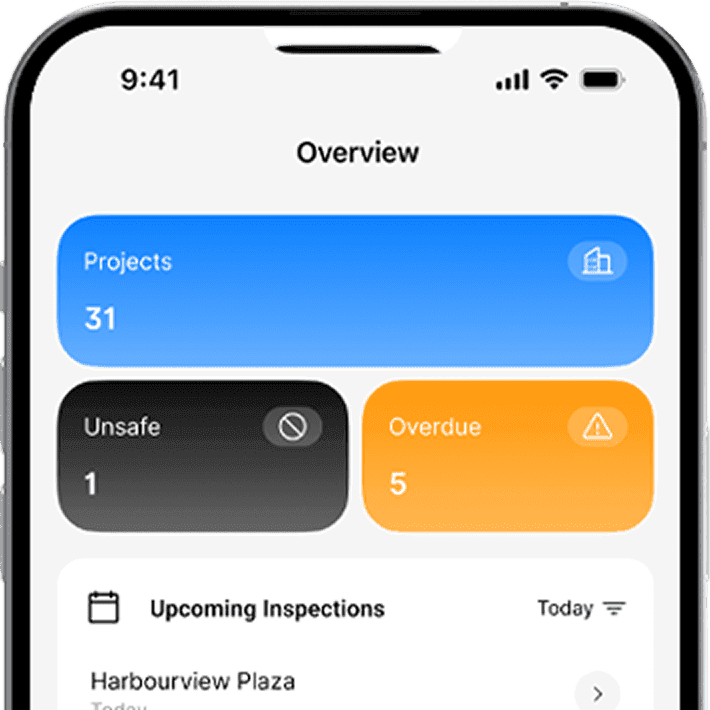
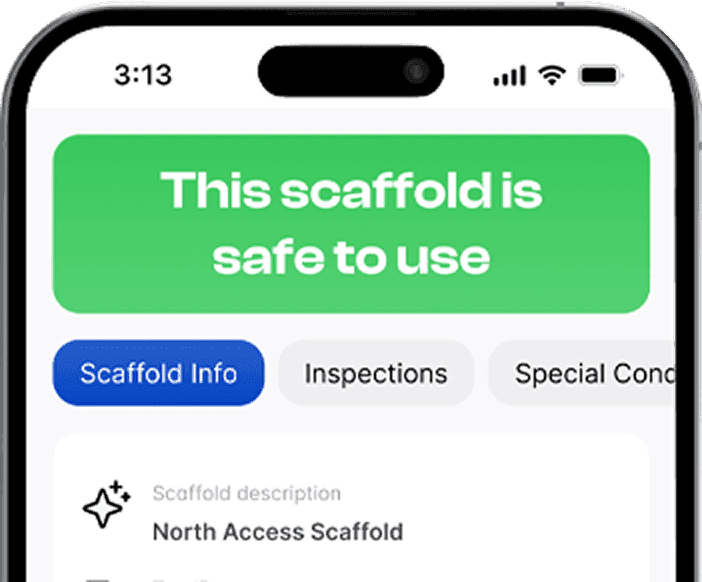
Scafflinq keeps the scaffold, its handover and every inspection since in one record behind a QR scafftag. Start free with 5 tags.